Yes, hops, the perennial climbing vine found wild in Europe and Asia, and member of the marijuana family. Hands up who knew that? No, me neither. And don't you look too smug- we know all about you. No surprise there.
Before you go rushing out to buy a plant, you need to know that male and female flowers are borne on different plants, and it is the unpollinated cone-like female flowers that are picked as hops, for brewing beer and for herbal medicine.
In ancient Rome, the hop was a popular garden plant and vegetable, its young shoots being eaten like asparagus. It wasn't until the sixteenth century that Flemish immigrants introduced the technique of brewing beer with the female flower, which revolutionised the brewing industry, as it enabled beer to be kept longer.
In medicine, the flowers have long been famous for their sedative effect, as a tea or in a hop pillow. Hop is a gentle sedative, with none of the side effects of sleeping tablets. Drunk as a tea, you may need to add honey, as the hops are bitter. They also relieve tension in the gut and sooth nervous indigestion. Two cups of hop tea a day can help with menopausal symptoms, as it contains oestrogen boosting compounds.
If your plant is grown from seed (late summer), you will not know the gender for 2 to 3 years. Germination can be erratic, especially if the seed isn't fresh. NB these seeds will be from wild hops and shouldn't be grown in area where there is commercial hop growing, as they may cross-contaminate.
Hops can also be grown from soft-wood cuttings in the Spring, or from root division. The plant will like a sunny location and will need sturdy support. It is a plant you will need to keep an eye on, or it can get out of control, though it does die back in the winter. Cut the plant down to the ground in Autumn and manure
it well. You can pick the young, edible side shoots in the spring, and steam them. The male flowers can be par-boiled for salads, and young leaves can be blanched, also for salads, or soups.
Hop tea is made from the female flower only. Contact dermatitis can be caused by its pollen when picking. The tea is recommended for anxiety, insomnia and restlessness, stimulating the appetite, flatulence and intestinal cramp. It may also help nursing mothers improve their milk flow. However, hops ARE NOT recommended for treating depressive illnesses, because of their sedative effect. It should also not be given to children who have not yet reached puberty, as it has the the most potent of all plant oestrogens. Consequently, it should also not be given to women with oestrogen sensitive disorders.
It can also reduce the potency of anaesthetics and it is a good idea not to take hops for at least 2 weeks before surgery, and to inform your doctor that you have been taking hops.
Fantasy and Adventure Stories & a Little Bit of Gardening
Total Pageviews
Saturday, 9 April 2016
Friday, 8 April 2016
Natural Healers- Garlic
A member of the allium family, which also includes onions and chives, garlic has been used in Britain since at least the beginning of the sixteenth century. The main beneficial ingredients of alliums are allicin and diallyl sulphides, which are anti-bacterial and anti-fungal. Garlic is believed to promote health by aiding the circulatory and digestive systems, boosting the immune system and lowering blood pressure. It also eliminates toxins and regulates blood sugar levels. The antibiotic quality of the plant means it can be used to treat colds and coughs and, if you can find a recipe, Athlete's Foot.
Garlic has more recently come under scrutiny for its anti-cancer properties, as a diet rich in garlic may reduce the likelihood of stomach cancers, as well as breast and prostrate cancers.
late February to March will do in the UK. Plant the cloves from a bulb, with the sharp end upwards, in full sun and in well drained soil, 2cms deep and 15 cms apart. Keep well watered. They will mature in the summer, when the top growth begins to change colour and keel over. Dry the bulbs thoroughly in the sun. Some folk believe tying the stems in a knot while the garlic is growing will increase the size of the bulb. I haven't tried this, so I can't confirm it. You can plant another batch in the autumn, but will have to protect it if the temperature falls below -15 degrees C, or 5 degrees F.
If you haven't got a garden plot, you can grow garlic in a container, on a sunny window sill, which will enable you to harvest the green leaves in much the same way you would chives.
It can be used as a companion plant as it masks the smell of the plants it is near. It is also, when used with water, is supposed to get rid of white fly. I have used it, but found no real impact on the pest. In my opinion, nothing really works on whitefly. Apparently, you can also use garlic as a glue and to neutralize bites and sting, but probably not at the same time.
The stalks of the immature flowers, or Garlic Scapes, can be harvested in late spring or early summer and added to salads. They have the same benefits as the bulb, but with a milder taste.
Cooked garlic doesn't have the same levels of allicin as raw, though it does retain other compounds. It is recommended that you let the garlic stand for 10 minutes after crushing it to allow the allicin to develop, before heating. If you want to keep its benefits, don't microwave it!
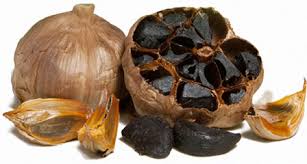
Something I did come across while researching this, is Black Garlic- apparently
aged garlic, which, I am led to believe, has a "treacly balsamic flavour", and twice the anti-oxidants as white garlic, and without the smelly breath. Let us know if you've tried it.
Thursday, 7 April 2016
Natural Healers- Fennel
Fennel grows wild in Europe and is naturalised in the USA, and while it looks like a larger version of its relative, dill, it has a distinct aniseed flavour. The ancient Greeks used it as a slimming aid, and for treating at least twenty illnesses. The Romans ate the leaf, seed and root in salads. In the Middle Ages, it was used to keep insects at bay.
There are three main varieties- Garden or Common Fennel, Bronze Fennel, and Florence Fennel (the one with the bulb. I tell you this now, as one of my colleagues bought some fennel for her garden and wanted to know how long it would take for it to swell. Unfortunately, she had planted Garden, not Florence Fennel).
Fennel is fairly easy to grow and will self seed, so keep an eye on it. It likes a warm, sunny space, though it cheerfully grows all over my allotment, which though sunny, is more than often not so warm. Garden Fennel plants can get quite big if you let them.
Florence Fennel needs more attention, in the form of more frequent watering. When the stem bases starts to swell, draw the soil around them, as you would for potatoes.
The bronze variety is quite attractive, but there is no difference other than colour between it and the green variety, as far as I am aware.
Fennel is renowned as a stomach soother, encouraging healthy digestion and easing stomach cramps. It can also be used to alleviate coughs and colds, when made into a syrup. It can help bring hormonal balance to females of all ages, and can relieve water-retention and bloating. It has also long been used as an appetite suppressant. It is generally the seeds that are used in remedies, a teaspoon into a cup of boiling water, then strained.
Other uses include the leaf and seed in facial steams, and the tea can be mixed with honey to make an anti-ageing face pack. No, I haven't tried it. Can't you tell?
Fennel is an additional seasoning for meats and fish, as well as serving as part of a vegetable and salad dressing. The leaves and chopped young stems can be used in a salad, and Florence Fennel (the bulb one, remember?) can be eaten either raw or cooked.
The plant produces seeds via small yellow flowers, which insects love,
particularly hoverflies- which help control white-fly. On my allotment, ladybirds (a gardener's friend) over-winter on the plants. It can also be used as a companion plant for onions and carrots as it's strong scent masks theirs.
One word of warning, before you all rush out to your garden centre- if taken in large doses, the essence of Fennel can cause convulsions and disturb the nervous system. In moderation, my dear friends, in moderation.
There are three main varieties- Garden or Common Fennel, Bronze Fennel, and Florence Fennel (the one with the bulb. I tell you this now, as one of my colleagues bought some fennel for her garden and wanted to know how long it would take for it to swell. Unfortunately, she had planted Garden, not Florence Fennel).Fennel is fairly easy to grow and will self seed, so keep an eye on it. It likes a warm, sunny space, though it cheerfully grows all over my allotment, which though sunny, is more than often not so warm. Garden Fennel plants can get quite big if you let them.
Florence Fennel needs more attention, in the form of more frequent watering. When the stem bases starts to swell, draw the soil around them, as you would for potatoes.
The bronze variety is quite attractive, but there is no difference other than colour between it and the green variety, as far as I am aware.Fennel is renowned as a stomach soother, encouraging healthy digestion and easing stomach cramps. It can also be used to alleviate coughs and colds, when made into a syrup. It can help bring hormonal balance to females of all ages, and can relieve water-retention and bloating. It has also long been used as an appetite suppressant. It is generally the seeds that are used in remedies, a teaspoon into a cup of boiling water, then strained.
Other uses include the leaf and seed in facial steams, and the tea can be mixed with honey to make an anti-ageing face pack. No, I haven't tried it. Can't you tell?
Fennel is an additional seasoning for meats and fish, as well as serving as part of a vegetable and salad dressing. The leaves and chopped young stems can be used in a salad, and Florence Fennel (the bulb one, remember?) can be eaten either raw or cooked.
The plant produces seeds via small yellow flowers, which insects love,
particularly hoverflies- which help control white-fly. On my allotment, ladybirds (a gardener's friend) over-winter on the plants. It can also be used as a companion plant for onions and carrots as it's strong scent masks theirs.
One word of warning, before you all rush out to your garden centre- if taken in large doses, the essence of Fennel can cause convulsions and disturb the nervous system. In moderation, my dear friends, in moderation.
Wednesday, 6 April 2016
Natural Healers- Echinacea
If you've always thought a herb is any useful plant, you'd probably be surprised to see echinacea absent from many herb books. However, its properties have been well noted for generations and its efficaciousness supported by research.
Echinacea is a group of North American Prairie perennials that can grow to a height of 20 inches, and are known for their purple, daisy-like flowers.
It is a perennial that should be grown in a sunny spot. It needs a rich, sandy soil, in an open site, as the plant is prone to mildew. Harvesting and drying the roots should be done in autumn.
It is used extensively to boost the immune system, treat colds and flu, fight infection, help speed up the healing of wounds, and reduce inflammation.
There are two varieties of note- E. angustifolia and E. purpurea, which are not entirely interchangeable, so do your research properly or ask an experienced herbalist, if you're looking at the plant as an alternative medicine.
Echinacea should be taken as soon as you feel signs of infection coming on; studies show it lessens the severity of colds and flu. It is thought to stimulate the immune system and localise infection, slowing its spread through the body. It has best results when used over a 7-10 day period after infection- so don't bother taking it over a longer period, or as a preventative- it won't work.
It is also used as an antibacterial in skin preparations and helps to heal wounds, septicaemia, boils and carbuncles. Both E.purpurae and E.angustifolia are good for acne and infected nails, speeding recovery and reducing inflammation.
E.purpurea is used for treating Chronic Fatigue Syndrome and yeast infections. E.angustifolia is good for ear infections, especially when used with Goldenseal. Purpurae has been used against Lyme disease, where it is thought the plant greatly increases the activity of natural killer cells, and inhibits secondary infections.
If you are looking at echinacea as an alternative medicine, please get professional advice. Echinacea does have side affects, so don't take it on a whim. Alternatively, you can just grow it for the flowers- the bees and other flying insects will enjoy the long lasting source of nectar and love you for it.
Echinacea is a group of North American Prairie perennials that can grow to a height of 20 inches, and are known for their purple, daisy-like flowers.
It is a perennial that should be grown in a sunny spot. It needs a rich, sandy soil, in an open site, as the plant is prone to mildew. Harvesting and drying the roots should be done in autumn.
It is used extensively to boost the immune system, treat colds and flu, fight infection, help speed up the healing of wounds, and reduce inflammation.
There are two varieties of note- E. angustifolia and E. purpurea, which are not entirely interchangeable, so do your research properly or ask an experienced herbalist, if you're looking at the plant as an alternative medicine.
Echinacea should be taken as soon as you feel signs of infection coming on; studies show it lessens the severity of colds and flu. It is thought to stimulate the immune system and localise infection, slowing its spread through the body. It has best results when used over a 7-10 day period after infection- so don't bother taking it over a longer period, or as a preventative- it won't work.
It is also used as an antibacterial in skin preparations and helps to heal wounds, septicaemia, boils and carbuncles. Both E.purpurae and E.angustifolia are good for acne and infected nails, speeding recovery and reducing inflammation.
E.purpurea is used for treating Chronic Fatigue Syndrome and yeast infections. E.angustifolia is good for ear infections, especially when used with Goldenseal. Purpurae has been used against Lyme disease, where it is thought the plant greatly increases the activity of natural killer cells, and inhibits secondary infections.If you are looking at echinacea as an alternative medicine, please get professional advice. Echinacea does have side affects, so don't take it on a whim. Alternatively, you can just grow it for the flowers- the bees and other flying insects will enjoy the long lasting source of nectar and love you for it.
Monday, 4 April 2016
Natural Healers- Dandelion
Bet you didn't see that coming. But why not? After all dandelions were a common plant in the Victorian kitchen garden- all parts of it are useful, and it is rich in minerals and vitamins. The Arab countries were using dandelions in the eleventh century, and by the sixteenth century it was well established as an official drug.
Aside from its medicinal properties, all parts of the plant can be eaten. The young dandelion leaves can be used in salads, the root to make a caffeine free coffee. It attracts butterflies and bullfinches, and early dandelions provide an essential first sugary drink for bees coming out of hibernation.
You might also be surprised to know that there is more than one variety- the dandelion, the Russian dandelion and the Chinese dandelion, the latter two being taller than just plain old dandelion. The Russian variety was extremely cultivated during the Second World War as a good source of latex.
If you wish to grow it, it is recommended that it is grown as an annual (it is a perennial) to reduce its bitterness, and in pot, not trays, due to its long tap root.
The flowers, once open, can be used to make wine (I remember picking them for my Dad, just for this) and the root, besides making a coffee of sorts, can also be added to salads, or roasted like a parsnip. The leaves are often blanched, like
endive.
The dandelion is renowned for its diuretic properties and as a blood cleanser and is regarded as one of the best herbal remedies for liver and kidney complaints. It is also mildly laxative and can treat dyspepsia. Its leaves are high in vitamins A, B, C and D, its A content being more than that of carrots. The latex from its leaves and stalks provides an effective treatment for corns, warts and verrucas. It produces a herbal fertiliser as it gives a good supply of copper.
It is also useful eczema type skin problems, boils and abscesses. In fact, the list goes on.
You can even make a pesto with its leaves, on their own or combined with nettles, instead of basil. Fancy it? Where's your sense of adventure?
You might also be surprised to know that there is more than one variety- the dandelion, the Russian dandelion and the Chinese dandelion, the latter two being taller than just plain old dandelion. The Russian variety was extremely cultivated during the Second World War as a good source of latex.
If you wish to grow it, it is recommended that it is grown as an annual (it is a perennial) to reduce its bitterness, and in pot, not trays, due to its long tap root.
The flowers, once open, can be used to make wine (I remember picking them for my Dad, just for this) and the root, besides making a coffee of sorts, can also be added to salads, or roasted like a parsnip. The leaves are often blanched, like
endive.
The dandelion is renowned for its diuretic properties and as a blood cleanser and is regarded as one of the best herbal remedies for liver and kidney complaints. It is also mildly laxative and can treat dyspepsia. Its leaves are high in vitamins A, B, C and D, its A content being more than that of carrots. The latex from its leaves and stalks provides an effective treatment for corns, warts and verrucas. It produces a herbal fertiliser as it gives a good supply of copper.
It is also useful eczema type skin problems, boils and abscesses. In fact, the list goes on.
You can even make a pesto with its leaves, on their own or combined with nettles, instead of basil. Fancy it? Where's your sense of adventure?
Sunday, 3 April 2016
Natural Healers- Carrot
Grown for many centuries in SE Europe and Western Asia, it was not until the sixteenth century that the British learned to cultivate the carrot. It is best grown in a light, well-drained soil, and in full sun (especially early crops). It will not do well in clay, but can be grown in a deep pot, if that's all you've got to work with. It doesn't like recently manured or stony ground either, and should follow brassicas or potatoes on an established plot.
The first sowings can be made in March in the UK, but under clotches or a poly-tunnel that has already been on the intended bed for at least 2 weeks, to warm the soil up. This March sowing should be of short rooted varieties.
The longer rooted varieties can be sown around mid April, depending on which bit of the UK you live in. At the end of the day, if you plant too early, the only thing that will happen is- well, nothing. They just won't grow. Hardly life changing.
It is recommended that your long roots should be planted in rows 12 inches apart and thinned out eventually to 3 or 4 inches between each plant. That's the recommendation; it isn't the law. Experiment. If you haven't much space, put them closer together. Who am I? the Veg-police?
You might want to chose a dull day or late afternoon/ early evening for thinning, so that the aroma from the leaves doesn't reach the carrot fly. And while we're on the subject of the carrot fly, you might consider planting your garlic with your carrots. Rosemary also repels carrot fly, but rather likes to stay in one place, so is, perhaps, not so practical.
As a food, carrots are known to aid digestion and control cholesterol. They are rich in beta-carotene, which enables the body to make vitamin A. They also contain silicon (which is good for skin and nails) which together with lycopene and lutein, promotes eye health. The anti-oxidants they contain are thought to "enliven" the liver.
A raw carrot a day can reduce the risk of some of the cancers of the digestive system, and the essential oil it contains can protect against internal parasites. Raw carrots are also beneficial for your and your dog's teeth.
Carrots are best if they are as fresh as possible, as their beta-carotene starts to decline as soon as they're pulled. Juicing gives the highest concentrate of beta-carotene, and a soup can be beneficial in soothing digestive upsets.
NB: There is conflicting opinion on whether diabetics should eat carrots, and though the latest evidence is in the carrot's favour, you might want to check carrots in your diet with your doctor.
Remember, as with beetroot, you can also eat the tops of carrots- they're not just there for the family guinea pig. The green foliage is rich in proteins, vitamins and minerals, and can be chopped and added to salads and stir-fries. You might want to learn even more about carrots and their benefits at the World Carrot Museum. Just click to be redirected. Who knew carrots could be so- er- interesting...?
Saturday, 2 April 2016
Natural Healers- Beetroot
There are two kinds of beetroot- the more familiar globe beetroot and the long-rooted one. I would assume that the long-rooted one (which I've never grown) will be a bit more fussy about the soil it's been planted in, much as carrots and parsnips are. The globe beetroot tends to sit mostly on top of the soil and so doesn't need quite the depth as root vegetables like potatoes, carrots and parsnips do.
Beetroot was well-known to the Romans and seems to have achieved popularity in Tudor times. It will grow in most gardens that have fertile soil, providing it's not prone to getting water-logged. You can sow them into the ground from mid-March onwards, in the West of England, and I would advise you that I have always got better results from soaking the seeds for about an hour, before planting them. If you're unable to soak them, give the drill you're planting them in a thorough soaking first, before dropping the seed in.
When they come up, you'll probably need to thin the seedlings out. Bear in mind as you do so, that the optimum size for your beetroot is something between a golf ball and a tennis ball. The plants generally manage themselves thereafter, and though they are subject to pest and diseases, I have found them generally trouble free.
The slugs do have a go at them, but beetroot doesn't seem to be their favourite food on the allotment. Don't forget to water the plants if you have a period of drought, or not only might the roots become woody, you might also find they split if you then get a sudden prolonged period of rain (this can apply to carrot and tomatoes).
Beetroot are a highly nutritious source of magnesium, iron and betaine, making them a useful ally in maintaining cardiovascular health, and thereby helping to lower the risk of heart attacks. It has a liver-cleansing action, improves oxygen uptake in the blood, and has anti-diabetic and anti-inflammatory properties.
Beetroot is best fresh, grated in salads, and it should be remembered that the leaves of the beetroot are also edible (as you would chard or spinach), and more nutrient packed than the root, with vitamin K and beta-carotene, and are good for the bones, blood, skin and eyes.
Beetroot juice can lower blood pressure within an hour of drinking it. Eaten with carrots, in a salad or as a juice, it can boost energy, improve appetite, and aid hormone regulation during the menopause.
It can be roasted or grated into salads or stir-fries, which besides getting the most out of its properties, also, it my opinion, mitigates the earthy taste that some people find objectionable.
There are lots of recipes out there in Internet-land, so don't think you just have to settle for beetroot roasted (the best way, it my opinion), steamed (better than boiled) or grated. And if you've never liked the sound of a beetroot and chocolate cake, please, please, do try it- especially with a quality vanilla ice-cream. Really, it's gorgeous.
Subscribe to:
Posts (Atom)